Fidelity to the Earth
Thus Spoke ZarathustraFidelity to the Earth is Zarathustra’s demand that human beings turn their hopes and powers toward earthly life instead of seeking their meaning in a world beyond it. It is not simply an instruction to accept life passively: virtue and knowledge must help give the earth meaning, while the doctrine of Eternal recurrence tests whether life can be affirmed in every detail, without wishing its past away. The idea gathers the book’s critique of otherworldly consolation into a positive task of creating value here.
The earth against the Afterworlds
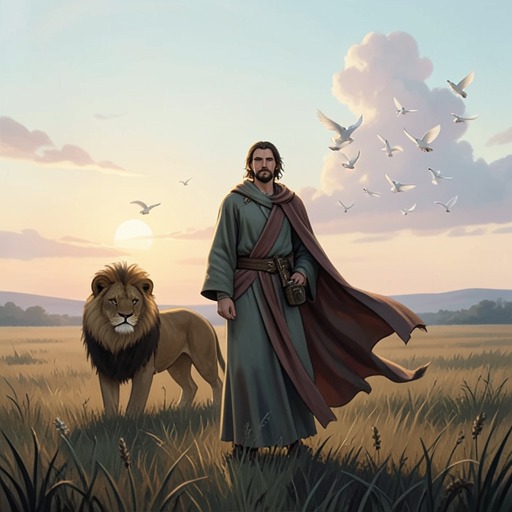
Zarathustra presents the Superman as the meaning of the earth and urges his hearers to remain true to it. This appeal sets earthly meaning against the promises of superterrestrial hope. Those who direct their faith toward such hopes are described as despisers of life, whether or not they recognize what their beliefs entail. With God dead, Zarathustra argues, the old hierarchy of blasphemies has changed: contempt for the earth has become the gravest offence. The demand is therefore more than a rejection of one religious teaching. It asks what can give human life direction once its highest meaning is no longer placed outside earthly existence.
The discourse on Afterworlds gives this opposition a personal history. Zarathustra recalls that he, too, once projected his deluded hopes beyond humanity. The world then appeared to him as the work or dream of a suffering, discontented God, and earthly things seemed like coloured vapour before a creator who wanted to look away from himself. The account makes the otherworldly impulse intelligible as a response to dissatisfaction: the creator’s supposed flight from himself is mirrored in the believer’s wish to escape the world. Zarathustra’s changed position reverses that movement. Rather than treating earthly existence as a shadow of some higher reality, he makes it the field in which meaning must be made.
Body, virtue, and the creation of meaning
The argument also overturns the old contempt for the body. Zarathustra recalls a conception of the soul that treated the body as something to be diminished or escaped, and he exposes the apparent spiritual superiority of that contempt: the soul that despises bodily life is itself imagined as lean, monstrous, and famished. The contrast matters because earth-fidelity cannot be achieved by simply replacing one abstract doctrine with another while continuing to devalue embodied existence. The body and the earth must be affirmed as the conditions from which human values arise.
Zarathustra’s account of the Ego makes this redirection practical. Even when the Ego invents or tells fables, it speaks of the body; as it learns greater honesty, it finds more ways to honour both body and earth. Zarathustra calls this a new pride: instead of turning the head toward heavenly things, people should carry an earthly head capable of creating meaning for the earth. He also urges them to desire the path humanity has followed, rather than shrinking from it as if it were merely the way of the sick and dying. His point is not that every inherited human action was wise. The book acknowledges that error and illusion have become embodied in human beings. Rather, those inheritances are to be taken up and transformed here, not escaped through hopes of redemption elsewhere.
This task shapes the place of virtue in the doctrine. Zarathustra asks that virtue’s bestowing love and knowledge serve the meaning of the earth, and he portrays virtue that has flown away from earthly concerns as something to be brought back to body and life. Its purpose is to give the earth a human meaning. Virtue is not rejected; its destination is changed. Instead of earning a reward in an eternal realm, it becomes a force for shaping earthly existence.
Religious inheritance and reversal
The book’s affirmation of earthly life carries, in the accompanying critical account, a striking relation to the Christian ideas Zarathustra opposes. The critic proposes that the positive doctrines of Thus Spoke Zarathustra emerged from transformed versions of Nietzsche’s earliest Christian, specifically Lutheran, ideas. Lutheran Pietism, in this reading, teaches acceptance of life’s events as divinely willed; Zarathustra’s Amor fati likewise affirms life as it is, though the grounding and vocabulary have changed. This proposed inheritance is presented as an interpretation of the doctrines’ formation, not as Zarathustra’s explicit explanation of them.
The same account draws a parallel between Eternal recurrence and Christian belief in eternal life and the unalterability of God: what is, is to be affirmed as enduring without end. It also relates the Will to power to divine grace through the idea of self-overcoming. In the comparison, grace elevates human beings above unregenerate nature, while a sublimated Will to power gives self-overcoming its positive force. The parallels help explain why Zarathustra’s earthly affirmation can retain the urgency of religious language while redirecting its object. The critic further compares the exhortation to Live dangerously with Christian rejection of the easy life, and the Great noontide with the Second Coming and Last Judgement. The Superman, in this account, takes up attributes associated with God as creator and highest being, but is placed within Zarathustra’s call to give meaning to the earth.
Eternal recurrence as a test
The book gives this affirmation its sharpest personal test through the demon’s hypothetical announcement that every part of one’s life must recur, again and again, in the same sequence. The image includes not only great joys and pains but thoughts, sighs, a spider, moonlight among trees, and the present moment. The question is not answered by proving that recurrence is true. Instead, the imagined possibility confronts a person with the quality of their relation to the life already lived: would the prospect provoke rejection, or could it be received as the most divine announcement?
The demon’s challenge makes affirmation exacting rather than sentimental. If the thought gained power, it would weigh upon every action; the test is whether a person could want this life again without reserve. Later, Zarathustra stages the idea at a gateway called Moment, where a lane stretching behind him and a lane stretching ahead meet. The past and future are figured as opposed paths that nevertheless touch there, and Zarathustra asks whether all things must return along the forward lane as well. The scene turns recurrence from a distant abstraction into a question asked within a particular moment, between a particular speaker and his companion.
Zarathustra’s animals eventually name the consequence of this teaching for him: he is to become its teacher, and that destiny is also his danger and sickness. The doctrine thus tests not only those who hear it but the burden of the one who must teach it. Fidelity to the Earth and Eternal recurrence meet in this demand: earthly life must not be treated as a disposable passage toward another world, because every feature of it belongs to the life one is asked to affirm.
Dramatic enactment and significance
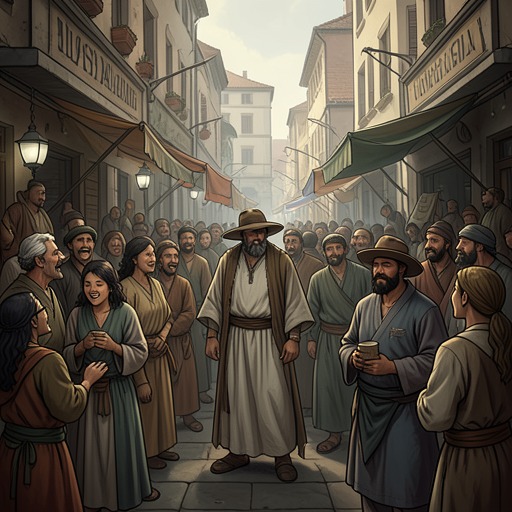
The book’s plot, as outlined in the accompanying critical account, makes earthly allegiance part of Zarathustra’s response to a failed public address. He descends from solitude to announce God’s death and preach the Superman, but humanity does not understand him. After the tightrope walker’s fall and a night of reflection, Zarathustra resolves to leave the marketplace and address individuals instead. This framing places the earth-directed teaching against both the failure of a crowd to receive it and the difficulty of finding hearers capable of taking responsibility for a future meaning.
The Ass Festival offers a later, comic reversal of religious forms. During the guests’ litany, Zarathustra cries out louder than the ass and rushes among the worshippers, pulling them up and rebuking their new faith; he also challenges The Abdicated Pope over worship of an ass as God. The scene does not erase the book’s religious language. Instead, it shows how readily worship can attach itself to a substitute object while leaving the act of submission intact. Against that spectacle, Fidelity to the Earth insists on a harder change: not merely finding a new object of reverence, but taking up the work of giving earthly life meaning. Its force lies in joining refusal to creation—refusal of a life-denying beyond, and creation of values capable of affirming the body, the earth, and the life that must be lived again.